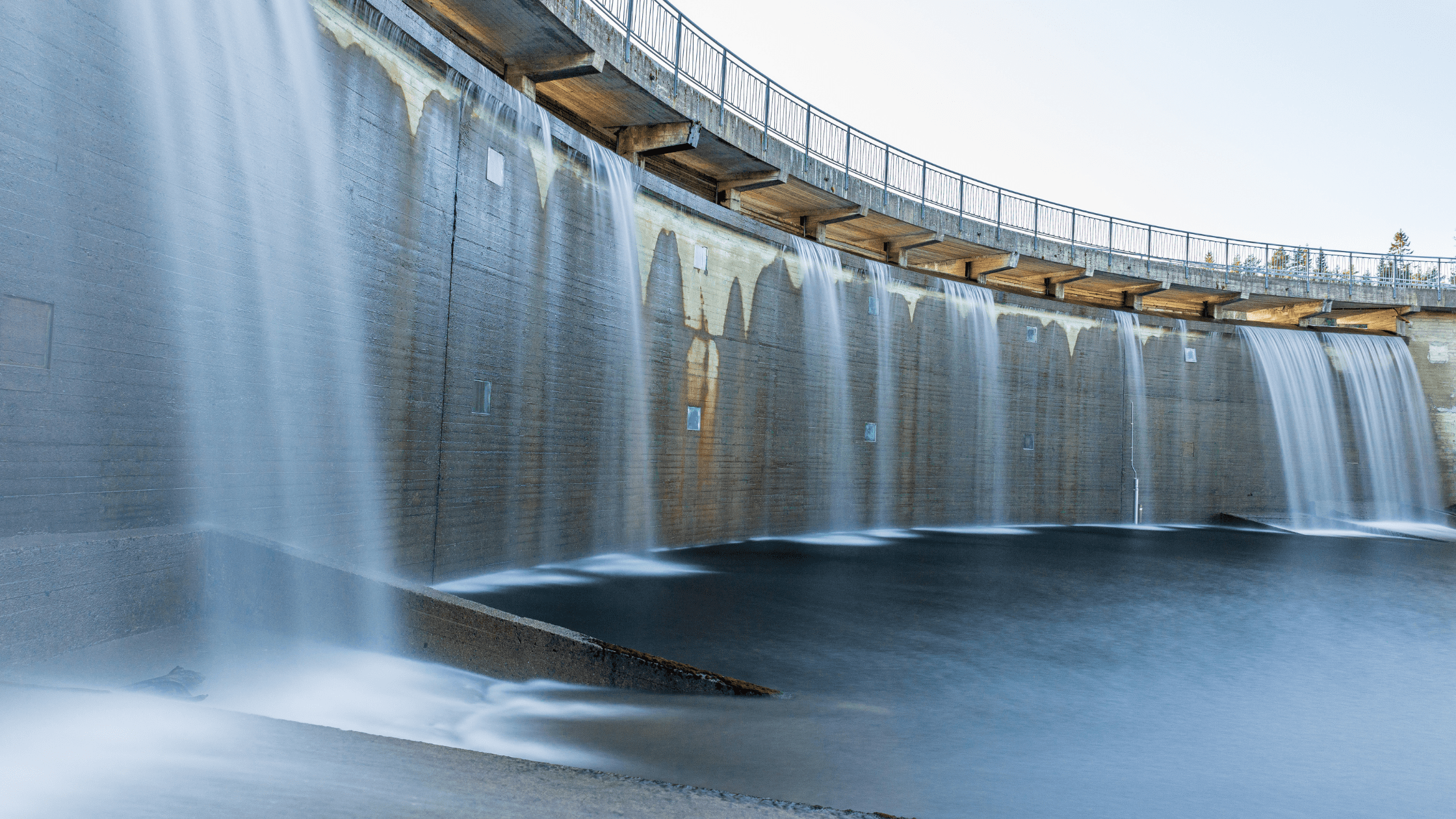
What does it take to build a new reservoir in the UK
19th November 2025

In November 2025 the 11-week public consultation period was launched for the planned construction of a new reservoir near Abingdon in Oxfordshire. Set to supply 15 million people in the South of England, the new reservoir is anticipated to cost over £5.5bn and would begin construction in 2029.
But what goes into building a new reservoir and what are the barriers to improving a public works scheme of this scale?
As climate pressures grow and demand for secure water supplies continues to rise, the UK is once again looking at reservoirs as a critical part of long-term water resilience – something we’ve talked about regularly on the Everflow blog.
But while a reservoir may appear, from the outside, as simply a large body of water, the process of creating one is anything but simple. Building a reservoir is one of the most complex infrastructure projects for a country like the UK and it take years of planning before a spade can break ground.
Let’s take a closer look at some of the planning, engineering, environmental and community considerations that shape reservoir construction projects.
At the start of any new reservoir project, water wholesalers and regulators carry out detailed modelling to determine whether future supply will meet projected demand.
A new reservoir is usually considered only when:
These decisions can take years of strategic planning and national-level scrutiny. Choosing to proceed with a reservoir project can help to safeguard long-term water supply and secure reasonable future business water prices.

Choosing a suitable site is one of the most challenging early steps, particularly in parts of a country that have a relatively high population density and limited space. Engineers, hydrologists and geologists (among others) must assess:
Over the course of this process, a team of experts may consider dozens of locations before a preferred option is selected.
It goes without saying that the construction of a reservoir dramatically reshapes the local landscape, which means environmental considerations are extensive. Detailed studies typically look at:
Modern reservoir projects often aim not just to minimise harm, but to enhance the surrounding environment with new wetlands, woodland and recreational areas.
Local communities play a major role in reservoir planning. A proposed reservoir can affect:
Consultations, exhibitions, public meetings and feedback processes help shape the final design. In many cases, community improvements such as footpaths, cycle routes or new natural habitats are included as part of the project to drive a positive impact that compensates for any negative consequences of the new reservoir.
Once a site is approved, the real fun begins and the emphasis falls on engineering solutions. This includes:
Every aspect must meet stringent safety and regulatory standards in order to maximise the efficiency of the reservoir and minimise the risk of a disaster. This is no easy task, of course. In the case of the proposed new reservoir in Oxfordshire, the reservoir must be capable of safely storing in excess of 150 billion litres of water.
A reservoir is classed as a nationally significant infrastructure project. This means developers must secure development consent orders (DCOs), environmental permits, land agreements and long-term financing. This stage alone can take several years.
Actual construction typically spans 5–10 years, depending on size and complexity. Work includes:
Reservoir sites often involve hundreds of workers, heavy machinery and round-the-clock logistics. If approved, the Abingdon dam is expected to come online in 2040.
Once complete, a reservoir isn’t filled overnight. It can take months or even years for water levels to reach full capacity, depending on rainfall and inflow rates. During this time, engineers perform safety checks and monitor the dam’s integrity and hydrological stability, as well as water quality and ecological responses.
Only once the reservoir is stable and certified does it become part of the active water network.
Most reservoirs operate for 100+ years, making them one of the longest-serving forms of national infrastructure. So, getting things right from the outset is critical to ensuring that this huge undertaking benefits the community and the country for generations to come.

At Everflow, our goal is to make your utilities simpler – we ensure you get great-value contracts that are tailored to your needs and easy to manage. Get a bespoke quote using the link below.


